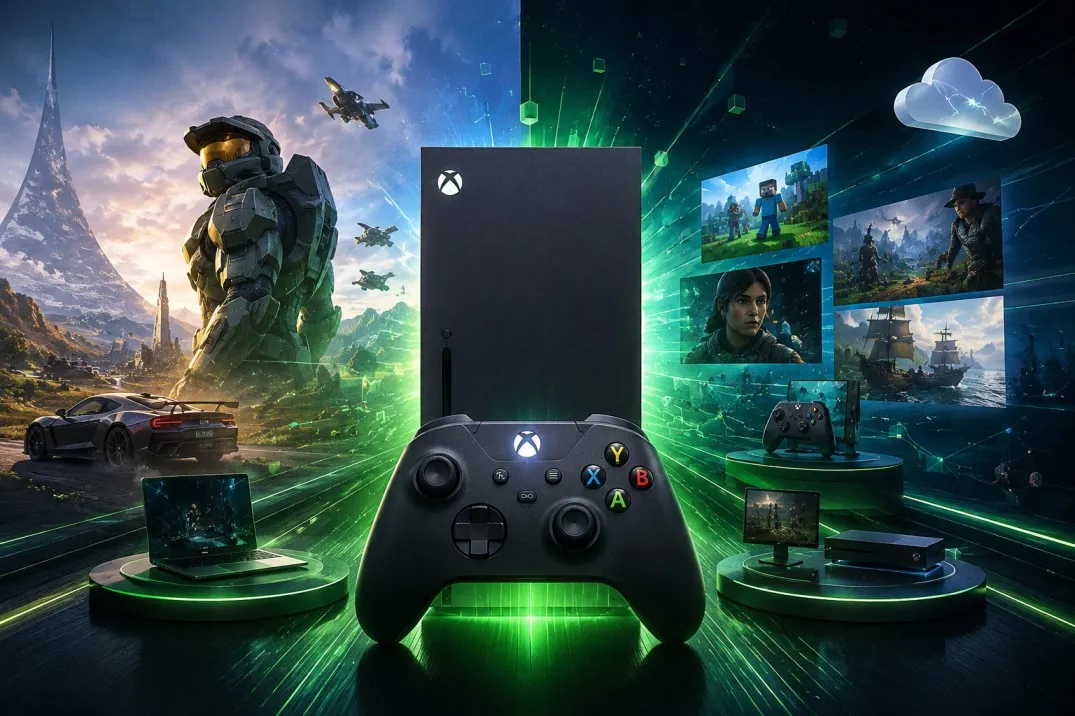
Xbox is going through one of the biggest strategic shifts in its history, and it has very little to do with making a faster console. The new Xbox strategy taking shape in 2026 is about rethinking what a gaming platform even means, blending PC and console identity, leaning harder into subscriptions, and adapting to a hardware market that has been turned upside down by a global memory shortage.
If you have noticed Xbox sounding less like a traditional console maker lately and more like a software and services company, that is not a coincidence. Here is a full breakdown of where the strategy stands right now and what it means for the future of the platform.
New Leadership, New Direction
In February 2026, Asha Sharma took over as Xbox CEO, succeeding Phil Spencer in a leadership change that signaled a meaningful shift in priorities. Alongside strategy chief Matthew Ball, Sharma has been candid about the fact that next-generation hardware plans, internally codenamed Project Helix, are being fundamentally reworked. That kind of public admission is rare for Microsoft, and it speaks to just how disruptive current market conditions have become.
Sharma has been explicit that the industry needs new business models rather than simply chasing more raw power. That statement alone marks a meaningful departure from the console wars mentality that has defined Xbox versus PlayStation marketing for decades.
RAMageddon: The Hardware Crisis Behind the Pivot
A major driver behind this strategic rework is what the industry has started calling RAMageddon, a global memory shortage that has hit hardware makers across the board. AMD has projected a 20 percent drop in gaming revenue for late 2026 because of it, and even Microsoft's own Surface devices have seen price increases tied directly to rising component costs.
This shortage makes it extremely difficult to build a high-performance console at a price point most consumers are willing to pay. In response, Microsoft is exploring advanced game compression techniques and more flexible storage configurations, aiming to keep large modern titles playable without requiring excessive, expensive onboard storage. It is a pragmatic response to a problem that is squeezing every hardware manufacturer right now, not just Xbox.
Project Helix: What We Actually Know
Project Helix is the codename for Microsoft's next-generation Xbox hardware, and it represents a genuinely different approach compared to past console generations. Rather than building a closed-box system that only runs Xbox-specific titles, Helix is being designed for deep compatibility between Xbox and PC games, essentially blurring the line between the two ecosystems entirely.
At GDC 2026, Microsoft teased the project publicly, even sharing images of an Xbox Developer Kit shell on social media. The console is expected to run on AMD silicon, continuing Microsoft's long-standing hardware partnership, and may ship as a fully digital device with no optical disc drive at all. Alpha prototypes are expected to reach developers starting in 2027, which gives a rough sense of how far out an actual consumer launch likely sits.
The Xbox Ally: A Preview of What's Coming
One of the clearest signals of where Xbox hardware is headed came earlier in the year when Phil Spencer pointed directly to the Xbox Ally, Microsoft's handheld built in partnership with ASUS, as a preview of the broader direction for next-gen Xbox. Rather than building its own handheld from scratch first, Microsoft chose to partner with ASUS to gather real feedback on a Windows-based, console-style experience before committing to its own first-party hardware.
The Xbox Ally runs full Windows underneath a TV-optimized, console-style interface called the Xbox Full Screen Experience. It functions similarly to how SteamOS handles Big Picture Mode, letting users dip into the full operating system when needed while defaulting to a streamlined, console-like experience for everyday play. Xbox President Sarah Bond has confirmed that more first-party Xbox hardware, built in partnership with AMD, is still coming.
Services First, Hardware Second
Perhaps the most telling shift in strategy is the move toward a services-first mentality. Microsoft already operates one of the largest subscription platforms in gaming through Xbox Game Pass, and the company appears to be doubling down on that strength rather than competing purely on console specs. Reports suggest Microsoft is exploring subscription-first models and new monetization structures that reduce its reliance on selling physical hardware at thin margins.
This also ties into Microsoft's ongoing work on an improved Xbox PC UI, based on changes tested through Xbox Cloud Gaming's desktop mode. The new interface includes a floating guide and smoother animations designed to unify the experience across consoles, PC, and cloud streaming. The clear message here is that Microsoft increasingly views these platforms as one connected ecosystem rather than separate products competing for attention.
Celebrating 25 Years While Building for the Future
2026 also marks Xbox's 25th anniversary, and Microsoft has balanced nostalgia with forward momentum throughout the year. At the Xbox Games Showcase, the company unveiled the Xbox Series X25 Limited Edition console and a matching Xbox Wireless Controller X25 Special Edition, both styled with a translucent green design that pays homage to the original 2001 Xbox.
Industry insiders have described Microsoft's 2026 roadmap as centered on four flagship franchises, sometimes referred to as the four horsemen of this year's lineup, designed to carry the brand while engineering teams finish work on next-generation hardware behind the scenes. It is a deliberate balancing act between honoring the platform's history and preparing for a future that looks increasingly less like a traditional console business.
New Controllers Are Coming Too
Hardware updates are not limited to the console itself. Reports indicate that the Xbox Elite Wireless Controller Series 3 is expected to launch sometime in 2026, alongside other controller revisions. These next-generation controllers are rumored to support direct-to-WiFi connectivity, which would eliminate Bluetooth latency issues that have occasionally affected cloud gaming scenarios on previous Xbox controllers.
Final Thoughts
The new Xbox strategy is less about beating PlayStation in a traditional hardware arms race and more about redefining what a gaming platform looks like altogether. Between the RAM shortage reshaping component costs, Project Helix blending PC and console identity, and a clear pivot toward subscriptions and cloud infrastructure, Microsoft is betting heavily on flexibility over raw horsepower.
Whether this approach pays off remains an open question, especially with hardware revenue declines still weighing on the division. But one thing is clear: Xbox's next era will look fundamentally different from anything that came before it, and the next twelve to eighteen months should reveal exactly how that vision comes together.
Frequently Asked Questions
What is Project Helix?
Project Helix is the codename for Microsoft's next-generation Xbox console, designed for deep compatibility between Xbox and PC games and expected to run on AMD silicon.
Why is Microsoft changing its Xbox hardware strategy?
A global memory shortage known as RAMageddon has significantly increased component costs, pushing Microsoft to explore new business models and engineering solutions rather than relying purely on raw hardware power.
Is the Xbox Ally a preview of the next Xbox?
Yes. Phil Spencer has directly pointed to the Xbox Ally, built in partnership with ASUS, as an indicator of where the broader next-generation Xbox experience is headed.
When will Project Helix be available to developers?
Microsoft plans to ship alpha prototypes to developers starting in 2027, suggesting a consumer release is still some time away.
Will the next Xbox have a disc drive?
Reports suggest the next-generation console may ship as a fully digital device, eliminating the optical disc drive entirely.
What is the Xbox Series X25 Limited Edition?
It is a 25th anniversary version of the Xbox Series X, featuring a translucent green design inspired by the original 2001 Xbox console, alongside a matching special edition controller.
Is Microsoft moving away from traditional console sales?
The company is exploring a services-first approach centered on Xbox Game Pass, cloud gaming, and new monetization models, signaling reduced reliance on traditional hardware sales as the primary business driver.